SOCIAL MEDIA & STUDENT WELLBEING
5 must-know strategies for educators today
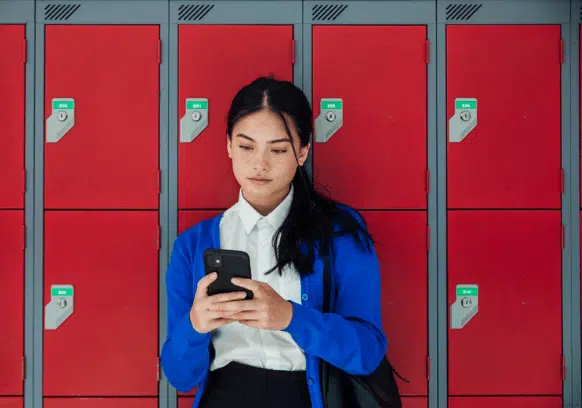
Phones away, minds engaged… but what happens after the bell rings?
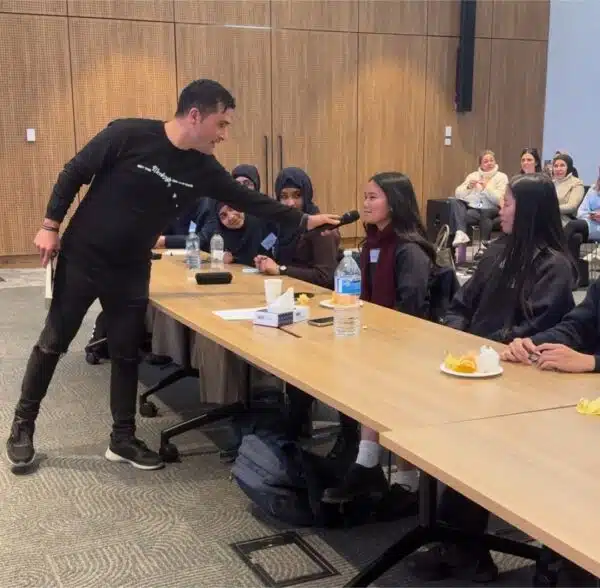
During a high school workshop recently, I invited students to reflect on their biggest “monkeys” – those habits, distractions or stressors that weigh them down.
One brave student stood up and introduced hers:
DISTRACTED DIZZY.
She shared how she’d been losing hours on TikTok after school, caught in the scroll cycle and feeling scattered by the end of the night.
But what happened next caught the whole room off guard – including me – when I asked her what she planned on doing to get that monkey off her back.
“I deleted TikTok during the break,” she said calmly.
The room erupted in applause.
It was one of those rare moments that cuts through. A reminder that, with the right space, support and challenge, students can make powerful choices. They just need guidance, belief – and the right questions.
Now of course, it’s important to acknowledge that not every student is stuck. Some are remarkably disciplined. They limit their screen time, stay focused, and remain mostly offline and engaged with life. But they are the exception, not the norm – and even they are still swimming in the same cultural current.
Psychologist and Author of The Anxious Generation, Jonathan Haidt, recently shared a confronting statistic on Oprah:
48% of adolescents in the US say they are online almost constantly.
Phones in hand. Minds elsewhere. Even when speaking to you, part of them is thinking about what they’re missing online. While that figure is from the US, Australian teens are facing similar patterns of digital saturation and social withdrawal.
Whether your school enforces a no-phone policy or not, the real challenge isn’t just what happens during school hours – it’s what happens after.
So as an educator, how do you support all students in navigating this digital landscape?
Here are five practical, empowering strategies:
1) ACKNOWLEDGE BOTH WORLDS
If your school already has a no-phone policy, you’ve likely seen benefits – calmer classes, better focus, and more student interaction.
But those phones are still waiting. Once the bell rings, it’s game on – and many students feel like they’ve been holding their breath all day, racing back to their feeds like a drug addict chasing the next hit.
And if phones are allowed during school hours, the impacts show up immediately – hallway Snapchats, distraction in lessons, or that subtle withdrawal when students are asked to put them away.
Either way, one truth stands: policy is external, but resilience is internal. Helping students build self-awareness and healthy habits is where long-term change begins.
2) TEACH THE SCIENCE BEHIND THE SCROLL
Students don’t need another adult telling them to “get off their phones”. What they need is insight.
In my sessions, I often explain how:
- Social media platforms are engineered to hijack attention through dopamine spikes
- Mindless scrolling erodes mental energy, self-esteem and focus
- Feeling anxious, low or flat after long screen-time isn’t failure – it’s brain chemistry doing its job
You might reframe it for students like this: “If you trained your brain to only chase sugar – what happens when someone hands you broccoli?”
Consider using reflection tools like mood trackers before and after screen use, or even have students create their own “terms of use” agreement for how they want to engage with technology mindfully.
Once students understand why they’re hooked, they’re far more likely to shift the how.
“Technology is a useful servant but a dangerous master.”
(Christian Lous Lange)
3) CREATE DAILY TRANSITIONS FROM DIGITAL TO PRESENT
Focus doesn’t automatically return the moment a phone is removed from sight.
Many students begin their school day coming off a night of late scrolling. Even if phones are locked away at 8:30am, their minds can still be spinning from the night before.
You might consider:
- One-minute grounding exercises before lessons
- Paper-based journaling at the start of class (a tech-free moment to land)
These aren’t time-wasters. They’re transition rituals – small resets that invite presence.
“Almost everything will work again if you unplug it for a few minutes, including you.”
(Anne Lamott)
4) PRIME STUDENTS FOR THE 3PM REBOUND
Here’s the trap: phones may be absent during school hours, but as soon as the day ends, they’re back – full force.
That 3PM moment matters.
You can help students pre-empt the scroll frenzy by:
- Encouraging them to reflect on their after-school screen habits
- Tracking how they feel before and after social media sessions
- Creating a class challenge: design a “30-minute phone-free routine” before starting homework
That’s exactly what the student with Dizzy the Monkey did. She took ownership of her habit without being told. She felt safe enough to reflect – and strong enough to act.
And not every student has just one monkey.
In another workshop, a student stood up and said:
“I feel like I’ve got all the monkeys on my back – but if I had to choose the biggest, it’d be EMOTIONAL ENZO.”
This was the monkey of low confidence. They explained how feeling not good enough led to procrastination, disconnection, and distraction. Enzo fed into Dizzy – the more their confidence dropped, the more they escaped into their phone.
It was a powerful moment of insight, and one the room deeply connected with.
Encourage your students to reflect. Invite critical thinking. Celebrate courage. The results might surprise you.
5) CHAMPION CONNECTION OVER CONTROL
In the end, the greatest cost of social media isn’t just cyberbullying or comparison. It’s disconnection.
When students lose the art of presence – of true eye contact, active listening, and thoughtful reflection – they lose the muscle that builds resilience.
This is where you, as an educator, have tremendous power.
I’ve seen the impact of simple classroom rituals:
- “Wins of the week” gratitude circles
- Peer appreciation shout-outs
- Collaborative projects that promote laughter, vulnerability and belonging
These are the antidotes to digital loneliness.
As Oprah said, “What every human being wants is to be seen, heard, and understood.” The classroom can still be that place.
“Connection is why we are here. It gives purpose and meaning to our lives”
(Brene Brown)
FINAL WORD: The scroll is loud. But your impact is louder.
You may not be able to control what happens on a student’s phone – but you can shape how they respond to it.
Whether your school locks up phones or navigates them daily, the mission is the same:
Help students get the monkeys off their backs – not by controlling the device, but by building the human.
When you equip young people with self-awareness, agency and tools for real connection, you don’t just protect their mental health.
You prepare them for a world where presence is the real superpower.